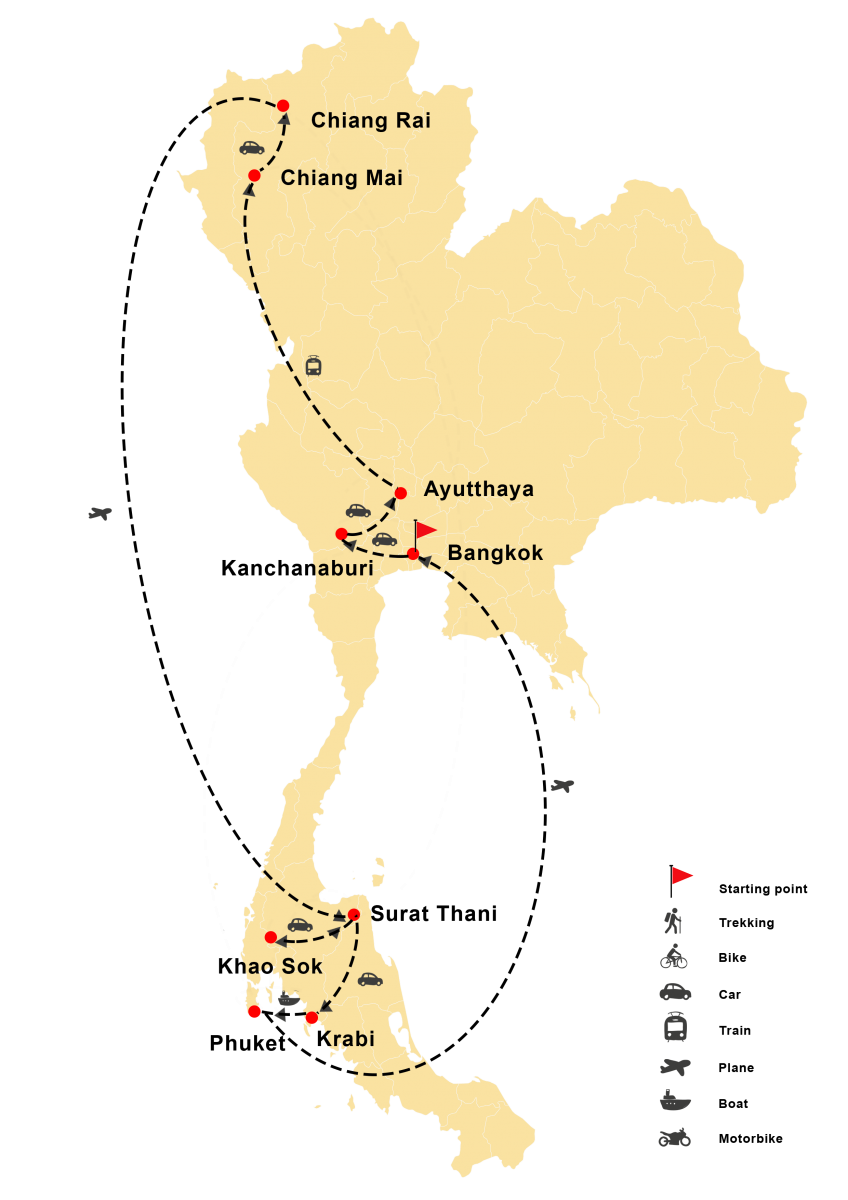
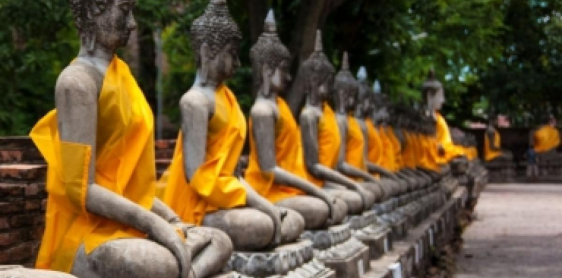
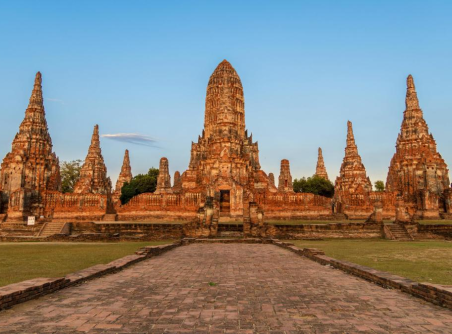
Having a breakfast and today we will pay a visit to some sites of Ayutthaya Historical Park, situated in the old city of Ayutthaya. The city was constructed by Ramathibodi I in 1350 and was the capital of Thailand until it was destroyed by Burmese – Myanmar army in 1767.
Being a ruin with many temples which characterize this type of architecture built with red bricks, the park was recognized as World’s Heritage Site by UNESCO.
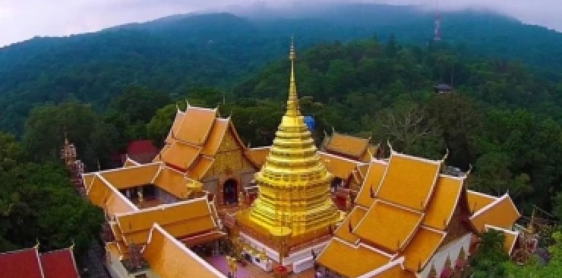
– Wat Phu Khao Thong is a massive pagoda towering in the middle of paddy fields and can be seen from afar. Built by King Ramesuan in 1395, the pagoda is unique with the combination of 2 architectural styles: Thai – style and Mon – style. There is a high golden plated chedi on the top, which makes the pagoda outstanding.
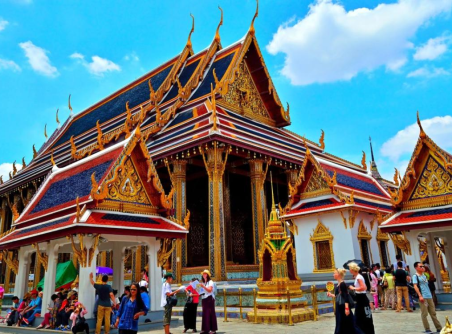
– Wat Phra Sri Sanphet was the most important temple of Ayutthaya and situated within the Ayutthaya Grand Palace grounds. It served as a model for the Temple of the Emerald Buddha in Bangkok. The highlight of Wat Phra Sri Sanphet is 3 towers standing high together in Ceylonese style, has the same architecture with Wat Phra Kaew in Bangkok.
– Vihara Phra Mongkhon Bophit is the pagoda in which the bronze Buddha statue in the attitude of subduing Mara is situated. This is one of the biggest Buddha statue in Thailand. It was considered to be built during the Ayuttaya period of King Srongta, who transferred the location from the east side to the west and has been the location since then. After that he ordered to build a dome on top.
– Wat Lokaya Sutha is considered as the sacred place for pilgrims since it’s famous for the reclining Buddha statue, which is the statue of the Blessed Buddha intact compared to other monuments in the entire Ayutthaya ruins. It is also the most important relics in most of those in Wat Lokaya Sutha. Thai people believe that if they paste the golden leaf onto Buddha statues, they will be protected by Buddha.
And after that we visit will be the Bang Pa-In Summer Palace, built during the Ayutthaya era. The palace showcases an eclectic collection of buildings that blend European, Khmer, Thai and Chinese architectural styles. It’s the favorite summer palace of the King.
And transfer to the station to embark on the night train to Chiang Mai (2nd class, sharing cabin). Overnight onboard.
Accommodation: Night on train.
Meals: Breakfast