
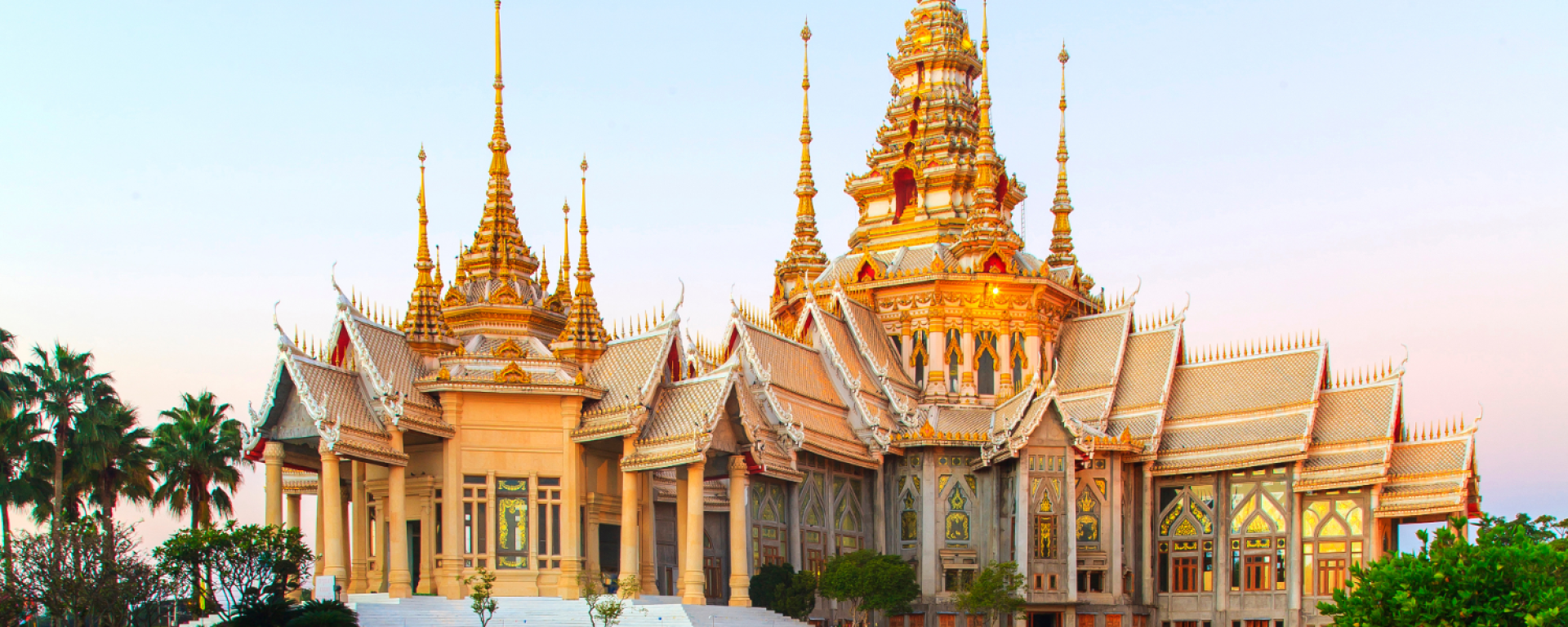
- 1. Wat Arun, Bangkok - Temple of Dawn
- 2. Wat Pho, Bangkok - Temple of the Reclining Buddha
- 3. Wat Rong Khun, Chiang Rai - White Temple
- 4. Wat Phra Kaew, Bangkok - Temple of the Emerald Buddha
- 5. Wat Phra That Doi Suthep, Chiang Mai - Golden Temple
- 6. Wat Si Chum, Sukhothai - Phra Achana (Speaking Buddha)
- 7. Wat Analayothipyaram, Phayao - Wat Analayo
- 8. Wat Sop Ruak, Chiang Saen - Sop Ruak Temple
Thailand is home to countless beautiful temples that reflect its Buddhist traditions, royal history, and artistic heritage. From grand temples in Bangkok to sacred sites on the mountains of Chiang Mai, each temple offers a different glimpse into Thai culture.
For travelers interested in history, architecture, and spirituality, these Top Temples You Must Visit in Thailand are excellent places to include in your itinerary.
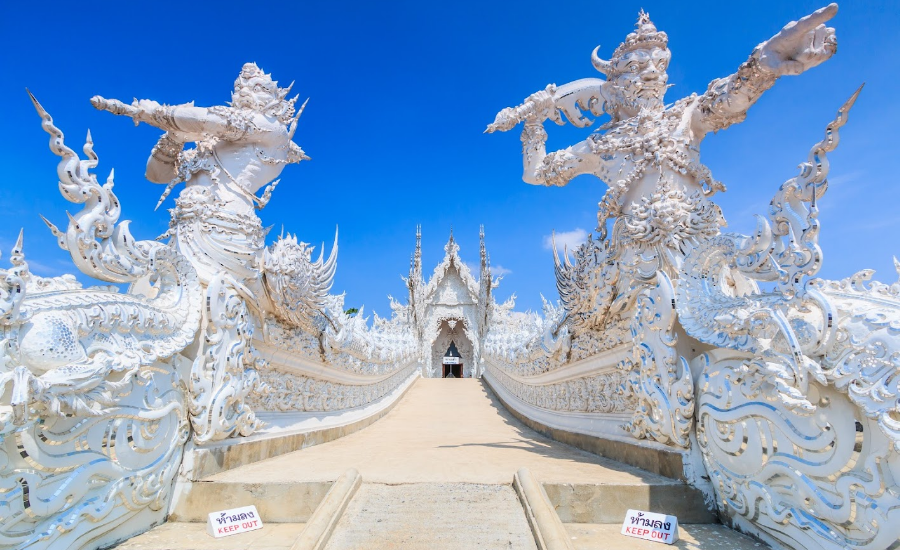
Two giant figures Rahu and Death of Wat Rong Khun, symbolizing fate and the impermanence of life at the Gate of Heaven
You may like: Top 5+ Most Stunning Buddha Statues in Thailand
1. Wat Arun, Bangkok - Temple of Dawn
Standing on the western bank of the Chao Phraya River, Wat Arun is one of Bangkok’s most iconic and historic temples. The temple has existed since the Ayutthaya kingdom and used to be known as Wat Makok or Wat Chaeng. Its name, “Temple of Dawn,” is associated with Aruna, the Hindu god of dawn, and the radiations of the rising sun.
What makes the temple stand out is the 82-cm central spire (sprang). It is said that the main central spire symbolizes Mount Meru, the centre of the universe in Hindu-Buddhist cosmology while the surrounding spires represent the wind Gos, Phra Phai. The spires’ surface is decorated with intricate patterns made from tropical sea snails and colourful porcelain.
Visiting this temple, travelers can climb the steep staircase of the main prang to enjoy the scenic beauty of the Chao Phraya River, Wat Pho and the Grand Palace. Moreover, you can also go inside the temple and admire murals, Buddha images and elaborate guardian sculptures while experiencing one of Bangkok’s important Buddhist places of worship.
.png)
Wat Arun beside along the Chao Phraya River
2. Wat Pho, Bangkok - Temple of the Reclining Buddha
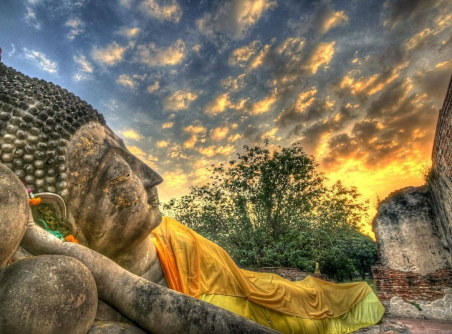
Wat Pho, officially known as Wat Phra Chetuphon Wimon Mangkhalaram, is one of Bangkok’s most historic and famous temples. The temple dates back to the Ayutthaya period and has experienced many changes and enlargements since then. The Wat Pho has two main sections: the northern area includes numerous Buddha statues and the school of traditional massage, while the southern area contains the monks' living quarters and the monastery.
The temple is usually known for its gigantic Reclining Buddha of 46 metres length and 15 metres height, together with an enormous number of Buddha images all around it. Beside its religious significance, Wat Pho has long been a centre of traditional Thai medicine and massage.
At Wat Pot, travellers can enjoy Buddhist art, pay respects to the Reclining Buddha and explore the temple’s peaceful courtyards. Those interested in Thai wellness can even experience a traditional Thai massage here.
.png)
Intricate temple architecture at Wat Pho, Bangkok
3. Wat Rong Khun, Chiang Rai - White Temple
Among all typical Thailand’s centuries-old golden temples, Wat Rong Khun stands out with its brilliant white architecture, making a considerable contrast with the deep blue sky. The temple began construction in 1997 by a renowned Thai artist Chalermchai Kositpipat, and later his five most outstanding students also took part in.
The white color of the temple represents the purity of Buddha, while the sparkling glass elements symbolizes Buddha’s wisdom. One of its most prominent features is the “Cycle of Rebirth” bridge. Therefore, the bridge brings about the message that after getting over all the adversity and temptation, you will achieve happiness. This site also features other unique and meaningful structures, such as the Gate of Heaven, Ubosot, and the Golden Building.
.png)
“Cycle of Rebirth” bridge with hundreds of outstretched hands beneath, whose meanings are "greed, anger, and delusion" of humanity
A visit to Wat Rong Khun not only allows you to simply pay respect to Buddha, but also to admire its spectacular architecture, which is the combination of Buddhist spirituality, contemporary art and symbolic design. Therefore, it is a great chance for photography, especially around the white Ubosot and its ornate bridge.
4. Wat Phra Kaew, Bangkok - Temple of the Emerald Buddha
Located within the Grand Palace in Bangkok, Wat Phra Kaew, or the Temple of the Emerald Buddha, is one of the most sacred Buddhist temples in Thailand. This temple has a legend of a lightning strike hitting a stupa and revealed a mysterious Buddha image made of green jade, which later became known as the Emerald Buddha.
The main feature of the temple, the Emerald Buddha is a 70-cm-high statue carved from green jadeite. It’s quite interesting that the statue's robes are changed three times a year according to the seasons. Beyond the sacred statue, Wat Phra Kaew is an impressive complex of around 100 intricate buildings and structures, surrounded by a 1-km-long wall decorated with about 170 murals depicting heroic scenes from the Ramakien, Thailand's national epic.
Coming here, visitors can pay respect to the Emerald Buddha while traditional Thai craftsmanship through the temple's unique architecture, colorful mosaics, golden decorations, and detailed murals.
.png)
The Emerald Buddha
5. Wat Phra That Doi Suthep, Chiang Mai - Golden Temple
Located on Doi Suthep Mountain at approximately 1,676 meters above sea level, Wat Phra That Doi Suthep is an important spiritual symbol of Chiang Mai. According to legend, the temple was constructed in 1383 with a view to enshrining Buddha's relics and it has become a significant pilgrimage site for generations of Thai Buddhists.
The most outstanding feature of the temple is the Chedi at its center, where it is believed to enshrine the Buddha's relics and is surrounded by small Buddha statues around. According to local people, if you pay sincere respects and walk around the Chedi three times, you will receive blessings and good fortune. The temple also has various gold-leaf and granite along with intricately carved, gold-leaf-covered Buddha images.
To reach the temple, visitors will climb the famous 309-step Naga staircase. After that, you can walk around the temple grounds, admire the golden chedi, make offerings and experience the peaceful atmosphere of this important pilgrimage site.
.png)
The golden Chedi of Wat Phrathat Doi Suthep
Learn more about Chiang Mai
6. Wat Si Chum, Sukhothai - Phra Achana (Speaking Buddha)
Wat Si Chum is an ancient Buddhist temple in the Sukhothai Historical Park, which is recognized as a UNESCO World Heritage Site. It dates back to the Sukhothai Kingdom, making it appealing for visitors seeking history and peace. In fact, the temple will offer you an insight into the history, Buddhist traditions and distinctive art and architecture of this early Thai kingdom.
The most well-known figure of this temple is Phra Achana, a seated Buddha statue 15 meters high and 11 meters wide. The statue is put in a large Mandapa, a square enclosed structure traditionally built to shelter a sacred image. Its thick walls and narrow opening create a dramatic setting, making the Buddha appear even more imposing. There is a legend associated with Phra Achana called “Speaking Buddha,” in which the Buddha was said to speak to people through a hidden passage inside the structure.
Today, visitors can pay respect to Phra Achana, admire the unique Sukhothai-style architecture, explore the ancient temple grounds and learn about the legend of the Speaking Buddha. The mandapa also provides an impressive setting for photography, especially in the morning when sunlight enters through the openings above and illuminates the Buddha.
.png)
Phra Achana sits within the massive mandapa of Wat Si Chum
7. Wat Analayothipyaram, Phayao - Wat Analayo
Wat Analayothipyaram, or Wat Analayo, is a Buddhist temple located on the summit of Doi Busarakham in Phayao Province, overlooking Kwan Phayao Lake. This temple was said to be developed under the guidance of Luang Pu Phaibun, and its architecture reflects a combination of Thai Lanna, Indian and Chinese. There are numerous Buddha images in different sizes, styles and postures, creating a peaceful and religious vibe.
Coming here, you can pay respect to the Buddha images, explore the temple grounds, admire its unique architectural details and enjoy panoramic views from the mountain. Surrounded by a lush tropical garden and dense forest, this site will offer you a tranquil setting away from the city.
.png)
The intricately carved temple gateway of Wat Analayothipyaram
8. Wat Sop Ruak, Chiang Saen - Sop Ruak Temple
Wat Sop Ruak is a Buddhist temple located in Sop Ruak Village, Chiang Saen District, Chiang Rai Province, in the heart of Thailand’s famous Golden Triangle. Situated near the meeting point of the Mekong and Ruak Rivers, the temple offers visitors a peaceful spiritual vibe with the distinctive landscapes of northern Thailand.
The temple is particularly notable for its traditional northern Thai architecture together with intricate decorative details. Large Naga serpent sculptures curve gracefully along the temple structures and stairways, featuring elaborate carvings that reflect the important role of the Naga in Buddhist and Thai artistic traditions. These impressive details are ideal for photography.
At Wat Sop Ruak, visitors can pay respect to the Buddha, admire the intricate Naga carvings and explore the temple grounds. After visiting the temple, travelers can continue to the nearby Golden Triangle viewpoint, enjoy views across Thailand, Laos and Myanmar, or take a boat trip along the Mekong River.
.png)
The temple’s entrance is adorned with intricately carved Naga serpents, a distinctive feature of Lanna-style Buddhist architecture
Tips for Visiting Temples in Thailand
- Dress modestly: Cover your shoulders and knees when visiting temples. Avoid revealing clothing, especially when entering prayer halls or sacred areas.
- Remove your shoes: Take off your shoes before entering certain temple buildings. Wearing comfortable footwear that is easy to remove can be helpful.
- Respect Buddha images: Do not touch, climb on, or sit near Buddha statues in an inappropriate manner. Follow the rules displayed at each temple.
- Be mindful during prayers: Keep your voice low and avoid disturbing monks or worshippers during religious ceremonies.
- Ask before taking photos: Photography may be restricted in some sacred areas. Always check the signs or ask temple staff if you are unsure.
- Bring sun protection: Many temple complexes have large outdoor areas, so bring water, sunscreen, and a hat, especially when visiting during the hotter months.
Conclusion
Thailand’s temples are more than beautiful religious sites; they reflect the country’s rich history, spiritual traditions, and distinctive architectural heritage. From ancient temples to contemporary creations, each one offers a different way to experience Thailand’s culture and understand the beliefs that have shaped the country for centuries.
If you want to discover Thailand beyond its beaches and bustling cities, visiting its temples is an experience you should not miss. Explore Thailand now and immerse yourself in the country’s fascinating culture, history, and timeless beauty.
-
 Thailand to Luang Prabang via Huayxay border 18 Days
-
 Doi Inthanon National Park 3 Days 2 Nights
-
 Hill tribe treks To The Less Seen Area Of Chiang Mai 3 Days
-
 Short trip to Bangkok with your kid 5 days
-
 Cultural Connections from Singapore to Thailand 20D19N
-
 Thailand, Cambodia & Vietnam Border Crossing 15 Days